
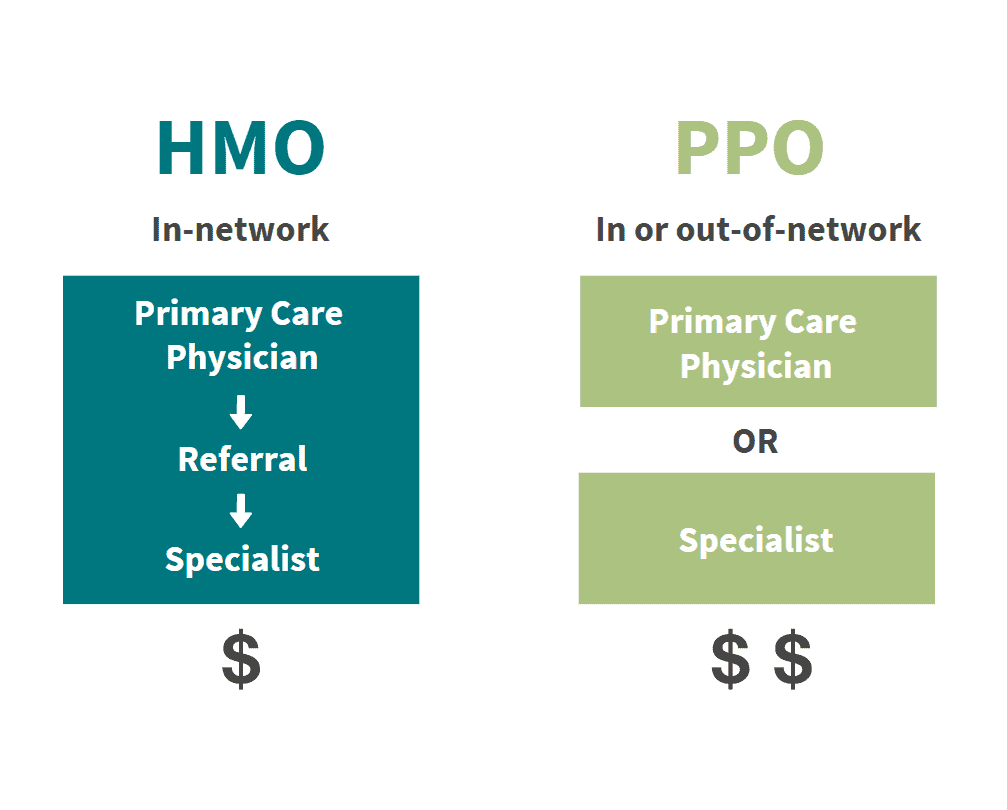
Quick answer: Many ACA marketplace plans use narrower HMO or EPO networks with referral requirements and little or no out-of-network coverage. Private plans from major carriers frequently offer broader PPO networks with out-of-network benefits and no referrals. The trade-off is that private plans are medically underwritten, so coverage isn’t guaranteed, and they aren’t HSA-eligible. If your household is healthy and you have doctors you want to keep or travel often, the network difference can matter more than the premium. If someone in the household has ongoing health conditions, the marketplace’s guaranteed-issue protection usually wins.
Who this is for
- Households above the ACA subsidy line ($62,600 single, $84,600 couple, $128,600 family of four in 2026) who are paying full price either way
- Anyone who has been told a doctor or specialist is “out of network” on their marketplace plan
- Business owners and professionals who travel and want coverage that works across state lines
- Families with an established relationship with a specialist they don’t want to lose
- Early retirees under 65 who want more flexibility than a local HMO
The problem: the comparison usually stops at price
When a high earner compares a private plan to the marketplace, the first question is what it costs. That’s fair. But for a household paying unsubsidized rates, the two options are often closer on price than people expect, and the bigger difference is who you can actually see.
Network is the part of the plan you don’t notice until you need it: the specialist who isn’t taking your plan, the referral you have to wait for, the urgent care visit on vacation that turns into a full-price bill.
How the networks compare
| ACA marketplace plans | Private PPO plans | |
|---|---|---|
| Typical network type | Many are HMO or EPO | Often PPO |
| Network size | Frequently local or regional | Frequently broader, sometimes nationwide |
| Referral to see a specialist | Often required on HMO plans | Typically not required |
| Out-of-network coverage | Usually emergencies only | Usually included at a higher cost share |
| Care while traveling | Emergency care covered; routine care often not | Generally covered through the PPO network |
| Guaranteed acceptance | Yes, no health questions | No, medically underwritten |
| Pre-existing conditions | Covered | May be excluded or declined |
| HSA-eligible | Yes, on HSA-qualified plans | No |
| Enrollment | Open enrollment or qualifying life event | Any time of year |
Plan designs vary by carrier, state, and county, so treat this as the general pattern, not a guarantee. Confirming your specific doctors against a specific plan’s directory is the only test that counts.
What you give up with a private plan
Private plans are medically underwritten. Each person applying answers health questions, and the carrier can rate up, exclude a condition, or decline. That’s the mechanism that lets private plans price coverage on health instead of age alone, and it cuts both ways.
For a household with a member who has a significant ongoing condition, the marketplace’s guaranteed-issue rule is worth more than any network advantage. It’s also why private plans work best as a complement to the marketplace, not a replacement: the right answer for some households is a private PPO for the healthy members and a marketplace plan for the one who needs guaranteed coverage.
Two smaller trade-offs: private plans aren’t HSA-eligible, and a broader network doesn’t help if the specific doctor you want isn’t in it. Check the directory, not the brochure.
Four questions that decide it
- Do you already have doctors you’d lose? If your primary care doctor or a specialist isn’t on your marketplace plan’s network, that’s a concrete cost of staying.
- Do you travel enough for a nationwide network to matter? A few trips a year to see family is different from working out of state every month.
- Is everyone in the household generally healthy? If not, guaranteed issue moves to the top of the list for that person.
- Would you rather pay for flexibility or prioritize guaranteed acceptance? There’s no wrong answer, but it should be a decision, not a default.
Real-world scenarios
Scenario 1: Consultant, age 44, healthy, on the road two weeks a month. Above the subsidy line, on a marketplace HMO that only covers routine care in her home state. A private PPO with a nationwide network fits the way she actually lives. Her doctors should be checked against the PPO directory before switching, but the network advantage here is real and specific.
Scenario 2: Couple in their late 50s, one spouse in active treatment for a heart condition. Guaranteed issue matters more than network flexibility for the spouse in treatment. He stays on the marketplace, ideally on a plan where his cardiologist is in network. The healthy spouse can be quoted separately on a private PPO. Split coverage keeps the protection where it’s needed without forcing the whole household onto a narrow network.
Scenario 3: Family of four, healthy, one child sees a pediatric specialist at a major hospital. The deciding question is whether that specialist is in network on a private PPO. If yes, the private plan likely offers better access at a comparable or lower premium. If no, the current marketplace plan wins regardless of what the PPO brochure says.
Scenario 4: Early retiree, 62, well-managed chronic condition, income under $62,600. Under the subsidy line, so the marketplace is the clear choice: a premium tax credit plus guaranteed coverage of the condition. A private plan would give up both. The network question is answered by picking the marketplace plan that includes her doctors.
What to do this week
- Check whether your current doctors and specialists are in network on your existing plan. Use the carrier’s directory, not memory.
- Ask what a private PPO’s network looks like for your household and run the same doctors against it.
- Weigh network flexibility against underwriting honestly, based on each family member’s actual health, not the household average.
- Get a marketplace and a private plan comparison side by side before renewing on autopilot.
- If anyone in the household has an ongoing condition, ask about a split structure rather than an all-or-nothing switch.
Frequently asked questions
Are ACA marketplace plans HMOs? Many are HMO or EPO plans, which means a local network, referral requirements for specialists on HMOs, and out-of-network care generally limited to emergencies. It varies by carrier and location, so check the specific plan.
Do private health plans have bigger networks than marketplace plans? Frequently, yes. Private plans from major carriers often use PPO networks that are broader, sometimes nationwide, with out-of-network benefits. It’s not universal, so confirm the network before you switch.
Can I see any doctor on a marketplace plan? Only in-network providers, in most cases. HMO plans typically require a referral to see a specialist, and out-of-network care outside of an emergency is usually not covered.
Does a marketplace plan cover me if I get sick while traveling out of state? Emergency care is covered. Routine or follow-up care outside your plan’s service area often is not, which is a common gap for people who travel regularly.
Is a private PPO worth it if I’m healthy? For a healthy household above the subsidy line, it can be, especially if you have doctors you want to keep or you travel. The premium is often comparable to the unsubsidized marketplace rate, and the network is usually broader.
What if one family member has a health condition? Consider a split structure: that person stays on the marketplace with guaranteed coverage, while healthy members are quoted on a private PPO. Underwriting is per person, so the household doesn’t have to move together.
Are private PPO plans HSA-eligible? No. If you contribute to an HSA, that’s a point in favor of an HSA-qualified marketplace plan for the person funding it.
How do I check if my doctor is in network before switching? Ask for the specific plan’s provider directory and search each doctor by name and location. A broker can do this for you across both the marketplace and private options before you decide anything.
Want to know which plan your doctors are actually on?
I’m Derek Greenlee, a licensed independent health insurance advisor. I’ll check your doctors and specialists against both marketplace and private plan networks for your household and show you a side-by-side, at no charge and with no obligation.
Book a free 15-minute consultation
Greenlee Health Insurance Phone: 480-375-1652 Email: derek@greenleehealthinsurance.com Web: www.greenleehealthinsurance.com
Related reading
- Why the ACA Subsidy Cliff Hits High-Income Households Hardest in 2026
- How High-Income Business Owners Should Structure Household Health Coverage in 2026
- Travel Nurse, Consultant, or Remote Contractor? How to Get Health Insurance That Actually Travels With You